Saturday, August 27, 2011

Deer vs. Kangaroo

On the eastern side of the Sierra Nevada, in the lands of the Mono, the native deer and kangaroo sometimes have late night encounters...

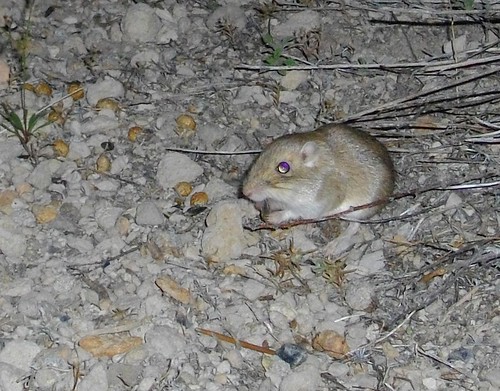
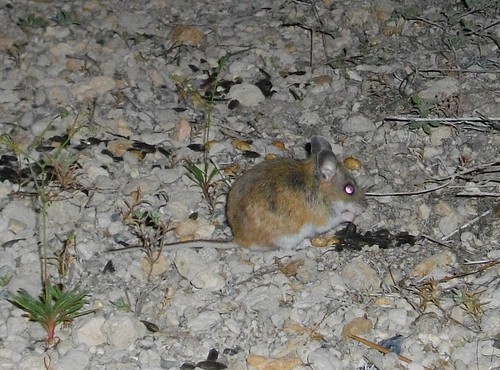
peromyscus
11:15pm - deer mouse, Peromyscus maniculatus, finds and starts collecting seeds
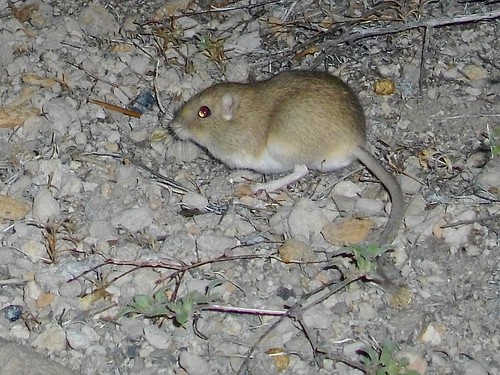
kangaroo mouse
11:17pm - kangaroo mouse, Microdipodops megacephalus, hops in while deer's away
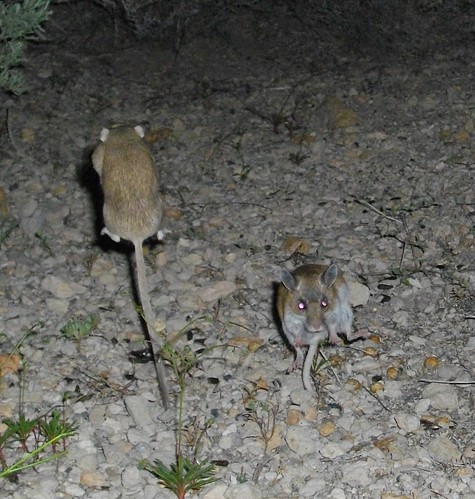
mouse fight!
11:27pm - deer versus kangaroo!

kangaroo mouse
11:36pm - to the victor go the spoils
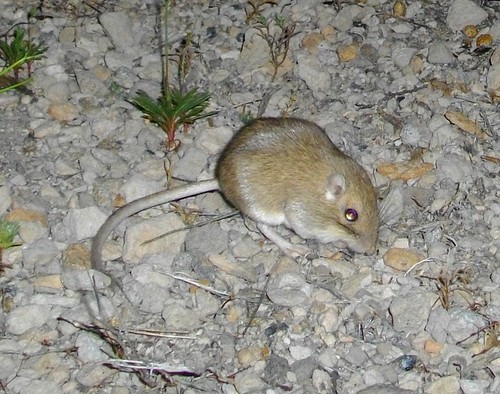
kangaroo mouse
11:39pm - kangaroo stuffs the last of the seeds into its pouches
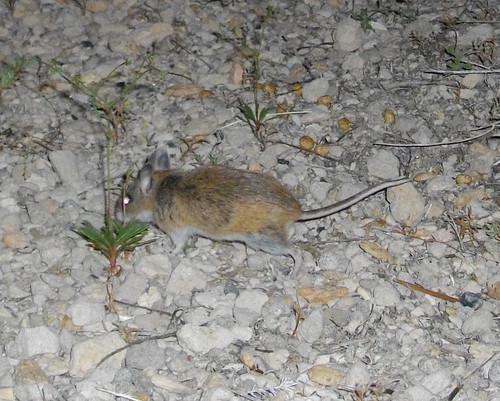
peromyscus
The next night at 12:08am - deer returns to the seedless battlefield

The mousy moral to this story?

Don't mess with kangaroos, man - they know them crazy Matrix-style moves.

====
References:
==========

Tuesday, August 23, 2011

A Fossorial Living Fossil

Mountain Beaver.

Boomer.

Showtl.

Aplodontia.

PC (Pre-Codger), I had only vaguely heard of these elusive, poorly monikered rodents.

But when we pulled Codge's preset cams during last year's cam trapping class, and saw photos of the marvelous beastie, I knew that I too wanted a crack at catching their grin.

So, this year, as part of Codger's pre-class sets, I sunk a cam at a highly likely burrow:

aplo set
Cam trap on aplodontia burrow in alder grove along Yuba River

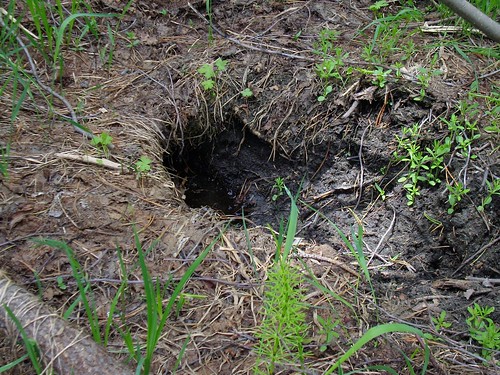
aplodontia burrow
They eat and collect bark and twigs - hence the "mountain beaver" nickname

The term "living fossil" is soooooo wonderfully exemplified by these fascinating rarities. The oldest living rodents, and the only members of their family and genus sill alive, molecular biology and fossil records are showing that the Aplodontidae split from the squirrel family about 40 million years ago, during the Eocene epoch.

Yes, the squirrel family. They're big, shaggy, mud-loving, slow-shuffling, nocturnal ground squirrels. Or, perhaps marmots, which are also old and related to squirrels, are a better comparison. But they're definitely not beavers.

My shy showtl did show - but only 3 times in 30 days, and not until the 6th night...

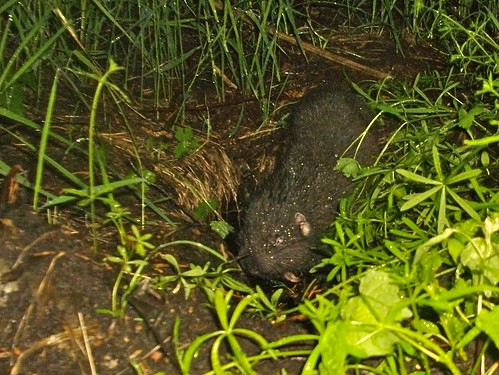
aplodontia
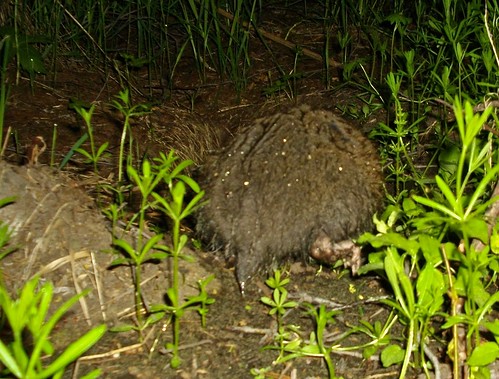
That ain't no beaver tail...

aplodontia
Bingo! An adult Aplodontia rufa is 16 inches long, and weighs about 1-1/2 pounds

aplodontia
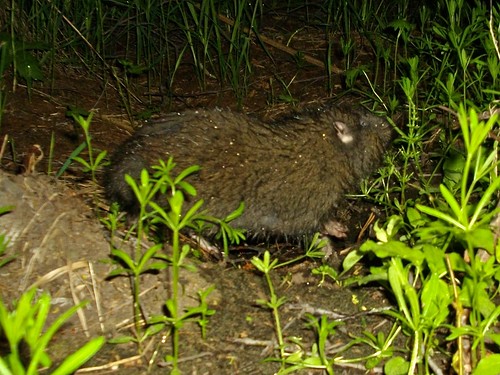
Check out those human-like ears and tiny, heavy-lidded eyes

aplodontia
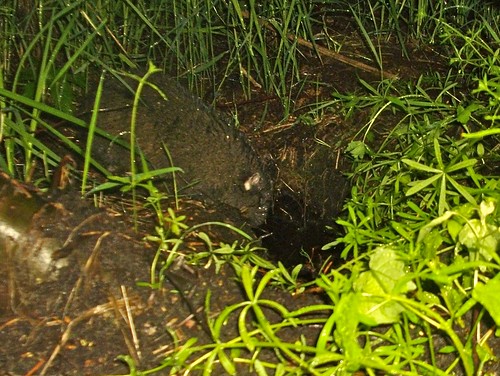
Burrow full of water? No prob for a rodent that builds chambers that trap air

aplodontia
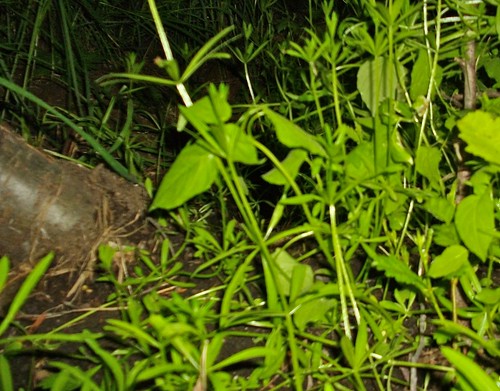
20 days later - its natural privacy screen is fully up

A good first try at these shy guys.

I'm looking forward to another go next year.

====
References:
==========

Sunday, August 14, 2011

Where the Dear Lil Antelopes Play

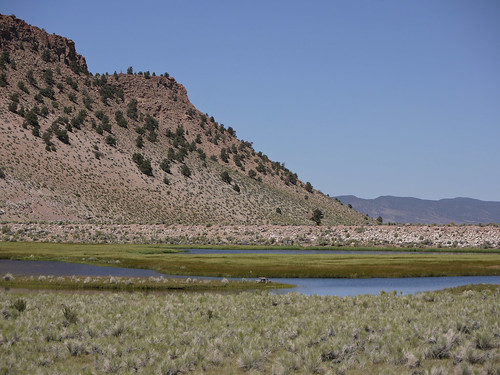
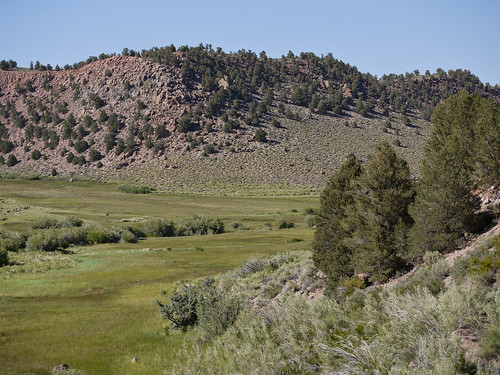
Along with the stint of trapping near the SFSU Field Campus, I also started a new survey that I think y'all will like - it's on the eastern side of the Sierra Nevada, south of Mono Lake, where an amazing volcano-designed landscape is being re-sculpted by water and wind.

On my first visit in late March, the region was still mostly snowbound.

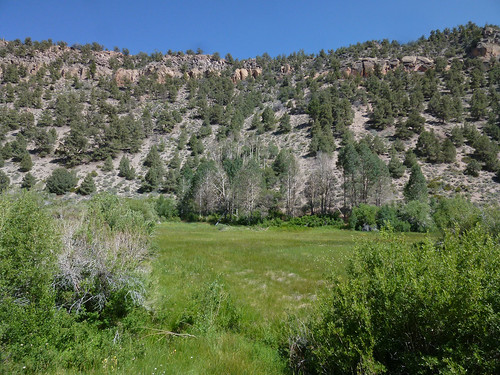
But, when I returned in July, it was green. Very green...

wetland on the rocks
Eastern Sierra Nevada pond and wetland at near 7,000 feet

valley split
Carved valley basin with streams that feed into pond

upper valley
Small groves of aspens and willows hug the valley border

pinyon scrub
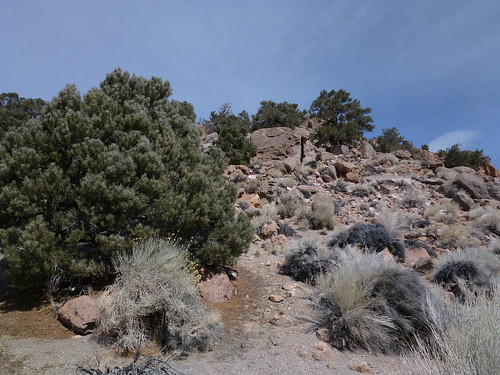
Pinyon pines, rabbitbrush, pumice and obsidian speckle the steep slopes

jeffreys
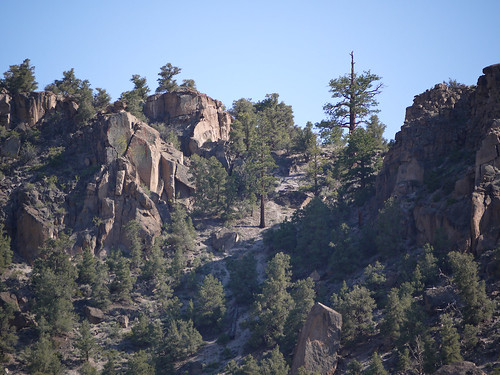
Jeffrey pines and dramatic outcrops line the ridges

One of the first mammals I glimpsed on my return was a small, gray chipmunk-looking tiny that bounded about in the mazes of sand and sagebrush.

But, I knew a way to get them to stop and smile for the cam.

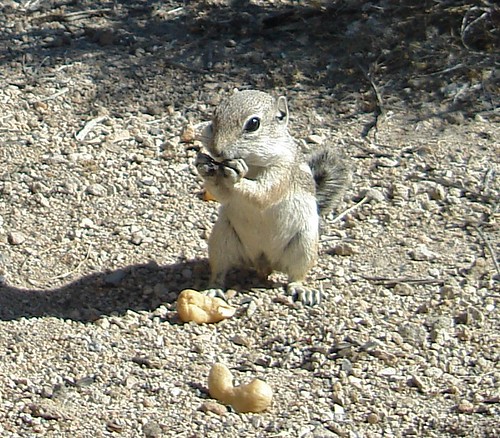
As it turns out, they weren't chipmunks at all. They're white-tailed antelope ground squirrels, Ammospermophilus leucurus, a fixture of the desert scrub.

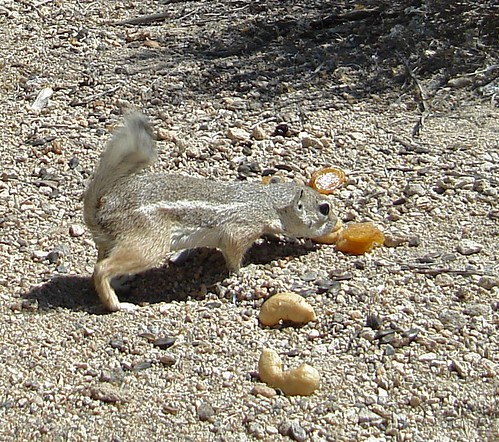
antelope ground squirrel
Antelope ground squirrel finding my friendship offering. The small ears, ashy gray fur and distinctive white side stripe are key characters for IDing the species

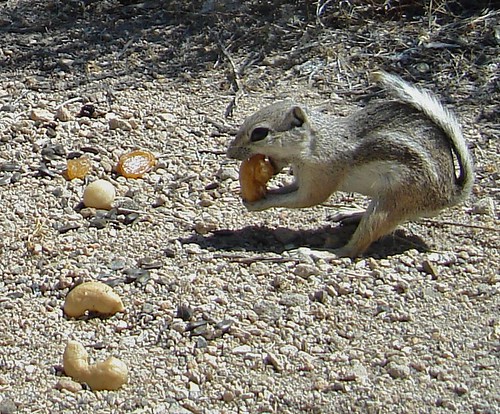
antelope ground squirrel
Groundie grabbing a cashew 1/2 the size of its head

antelope ground squirrel
"Burp"

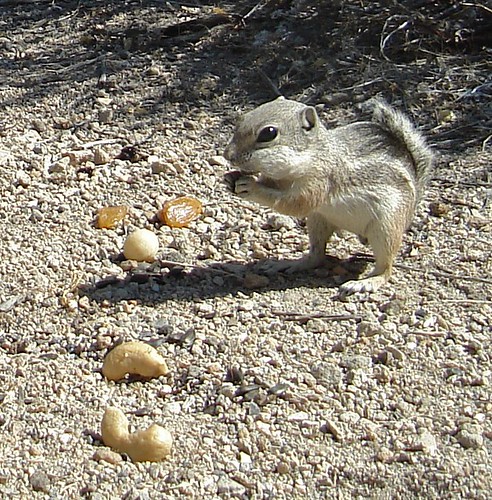
antelope ground squirrel
Doing a little cheek stuffing

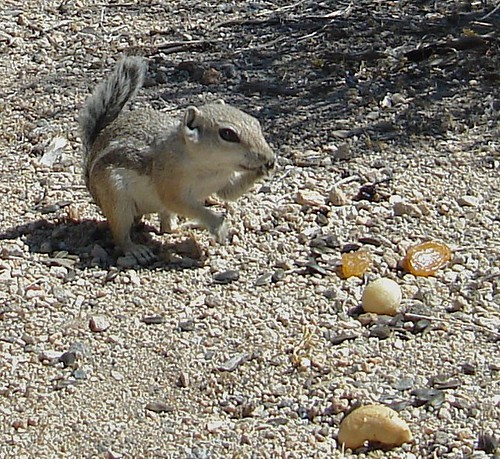
antelope ground squirrel
A final face full

And this is just one of more than a dozen mammal species in this region that I've not had the opportunity to trap on the other side of the Sierra Nevada.

Really looking forward to seeing what else shows up.

====
References:
==========

Monday, August 8, 2011

Just Another Manic Marten

Us "grad students" love it when we get the call from prof Codge for a cam trapper's jamboree.

Because we know that fun will be had, and great critters caught.

In this case, around the SFSU Field Campus in the Tahoe National Forest, next to the Yuba River, and near the Yuba Pass, as primer eye-candy for his yearly camera trapping workshop.

A class we-who-gathered had all taken last year and thoroughly enjoyed - the curriculum, the Codge, the classmates, the campus and the countryside.

So going back to trap around that beauty area was a treat not to be missed.

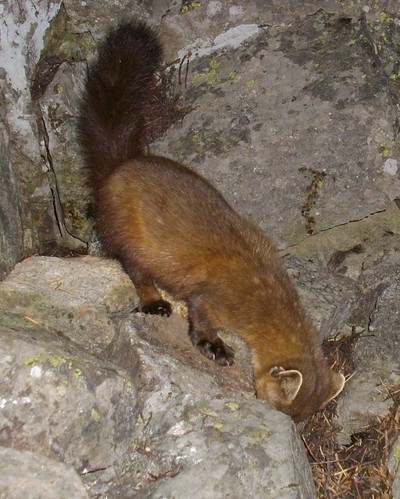
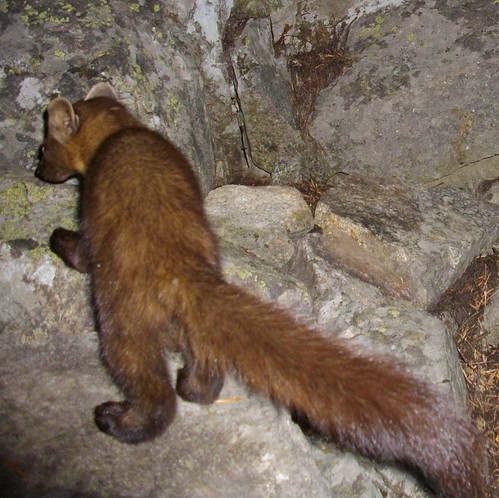
Like the Codger, I too set on the slope where the elusive Martes americana had been glimpsed.

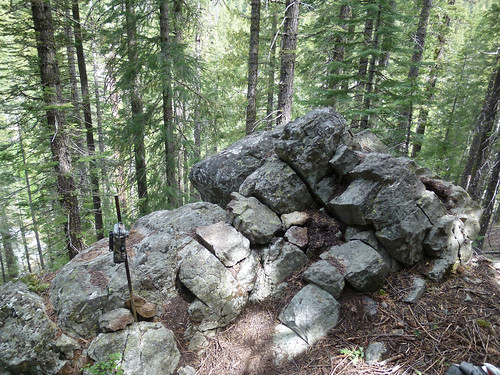
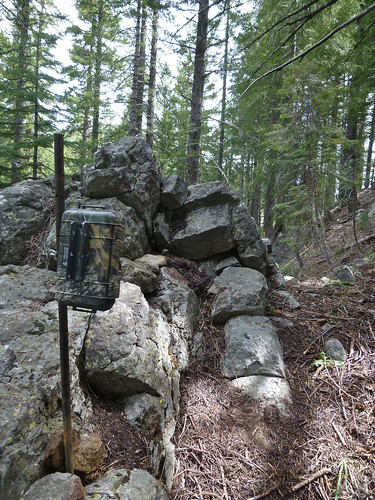
Taking a slightly different approach to his extremely cool  l o n g  log set, I planted my cam in tight to the scene, using a jumble of rocks to create a theater of focal area.

marten set
Set on outcrop for marten

marten set
The rock theater forces the focal plane

And then I dabbed a smelly scent in the cracks and crevices.

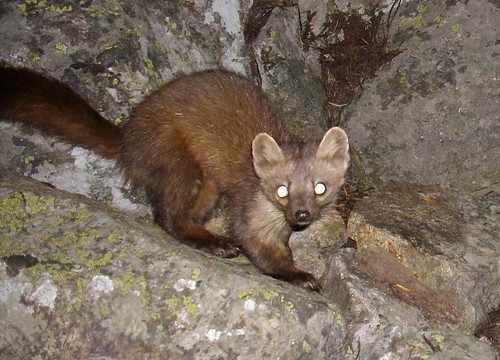
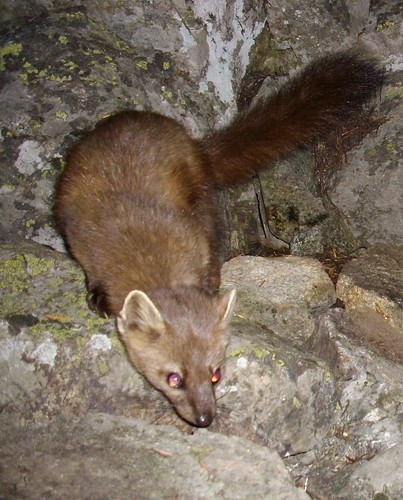
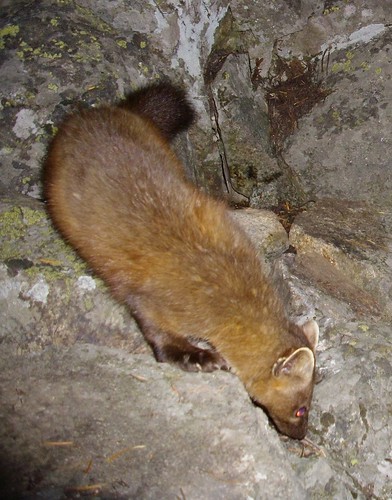
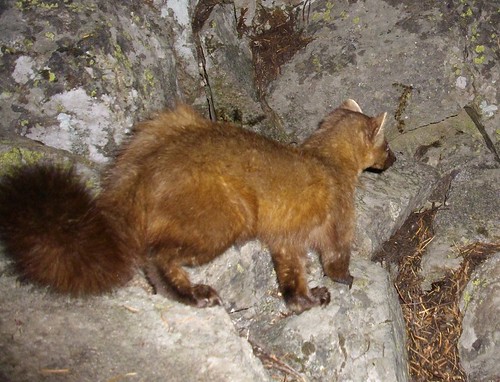
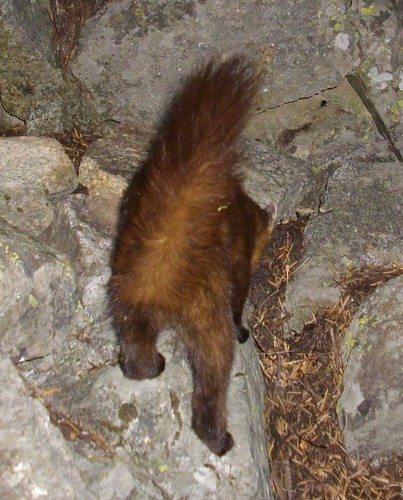
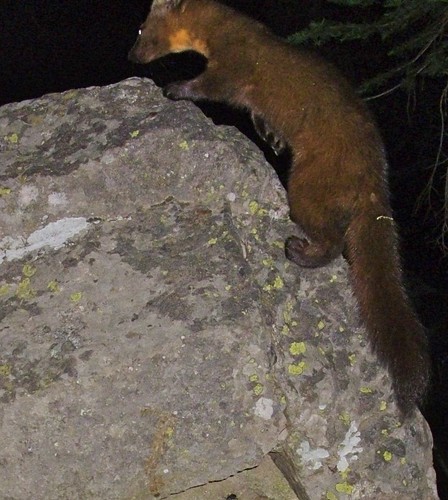
My marten visited 3 nights to frenetically search for the source of the stench...

marten
5 nights after we set at 3:34am

marten
5 nights later at 12:45am

marten
"Is it in there?"

marten
"Under there?"

marten
"Over there?"

marten
8 nights later at 9:20pm

marten
One more try

marten
Off to the next episode...

Hard to tell for sure if it's just one, and the same one as visited the Codge's set.

So for now, it's just another manic marten.

====

References:
==========

Wednesday, August 3, 2011

Just Add Harmonica

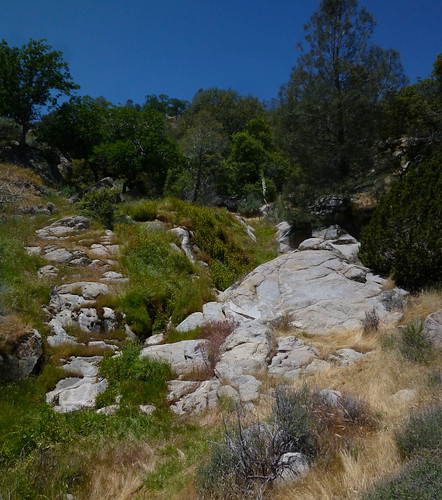
As soon as I saw the area around this Tehachapi spring, I knew I had to set it.

The scene was just so scruffy and western and full of California character.

mmmm carbonates

I scrambled up the rocks and set the cam just above the seep, where the post could grab some dirt, and a well-worn game trail trickled down from the hillside.

Unfortunately, it lasted only 3 nights. When I picked the cam up, the post was 1/2 out of the ground, bent back, and the cam facing the sun.

A neat trick too - since I had pounded the long post in 12 inches, and had piled large rocks around it. Oh - it was also tucked into a yucca - the plant lovingly called "Spanish Bayonet."

So whatever got it, did so with stealth, or by day, because the camera was set for night only, and no photo was caught of the assault.

Yet, in just 3 nights, some fun photos were caught.

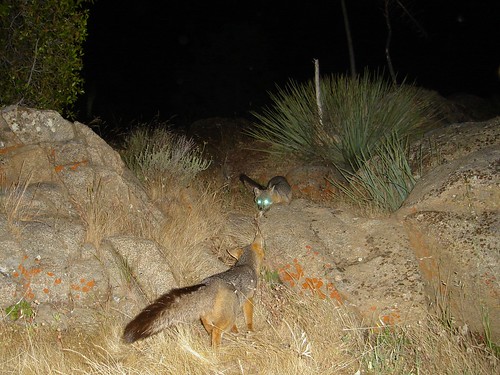
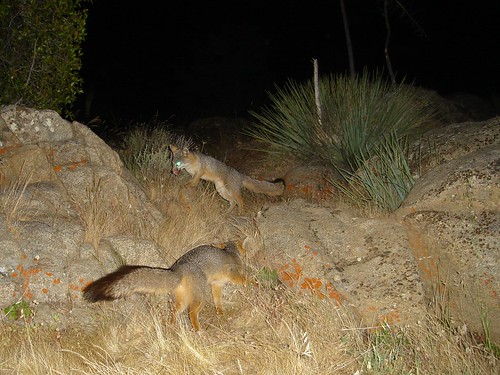
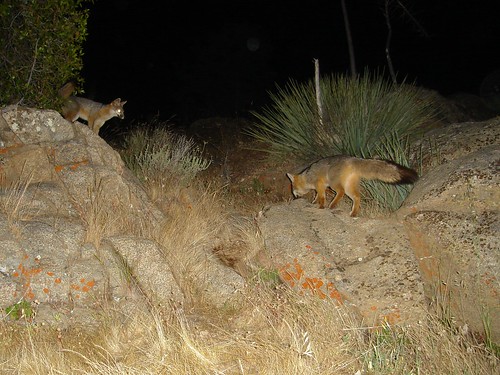
As usual, the gray foxes were the first to show, scratch and sniff the scene:

foxes

I believe the laid-backed ears and pointed down tail is a sign of submissiveness. I.e., foreground fox is saying "hey - when you're done - I'd, ya know... like a sniff too, ya know..."

foxes

foxes

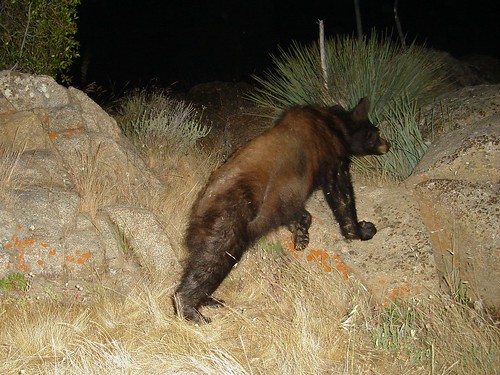
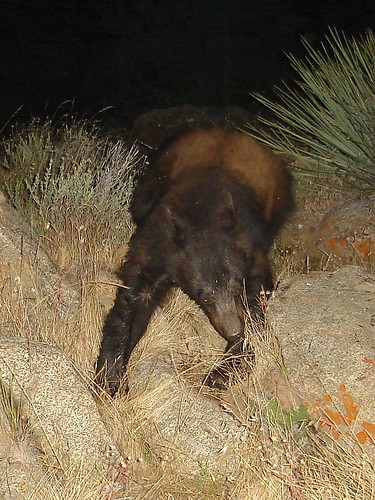
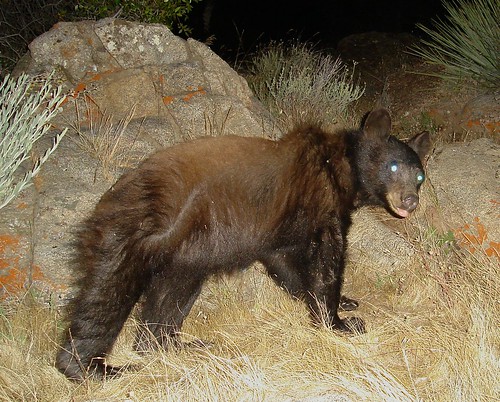
On night 2, this brownish black bear showed to also enjoy the scents of the scene. Perhaps this is the brute that bear-handled the camera? That grin seems to foreshadow such mischief...

bear

bear

bear

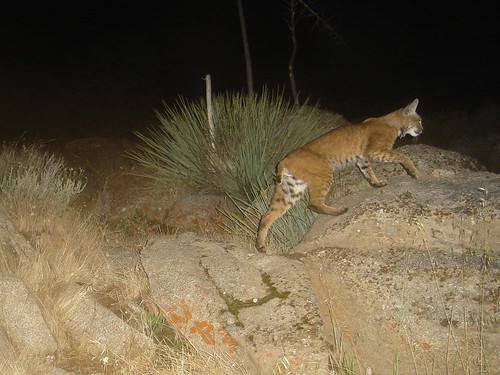
And, on night 3, this sleek bob strutted through...

bobcat

And that's all she wrote. After that the cam stared into the sky, and the eneloops slowly died.

But I'm definitely gonna give this spot another try.

This Tehachapi mystery needs a sequel.

====

References:
==========